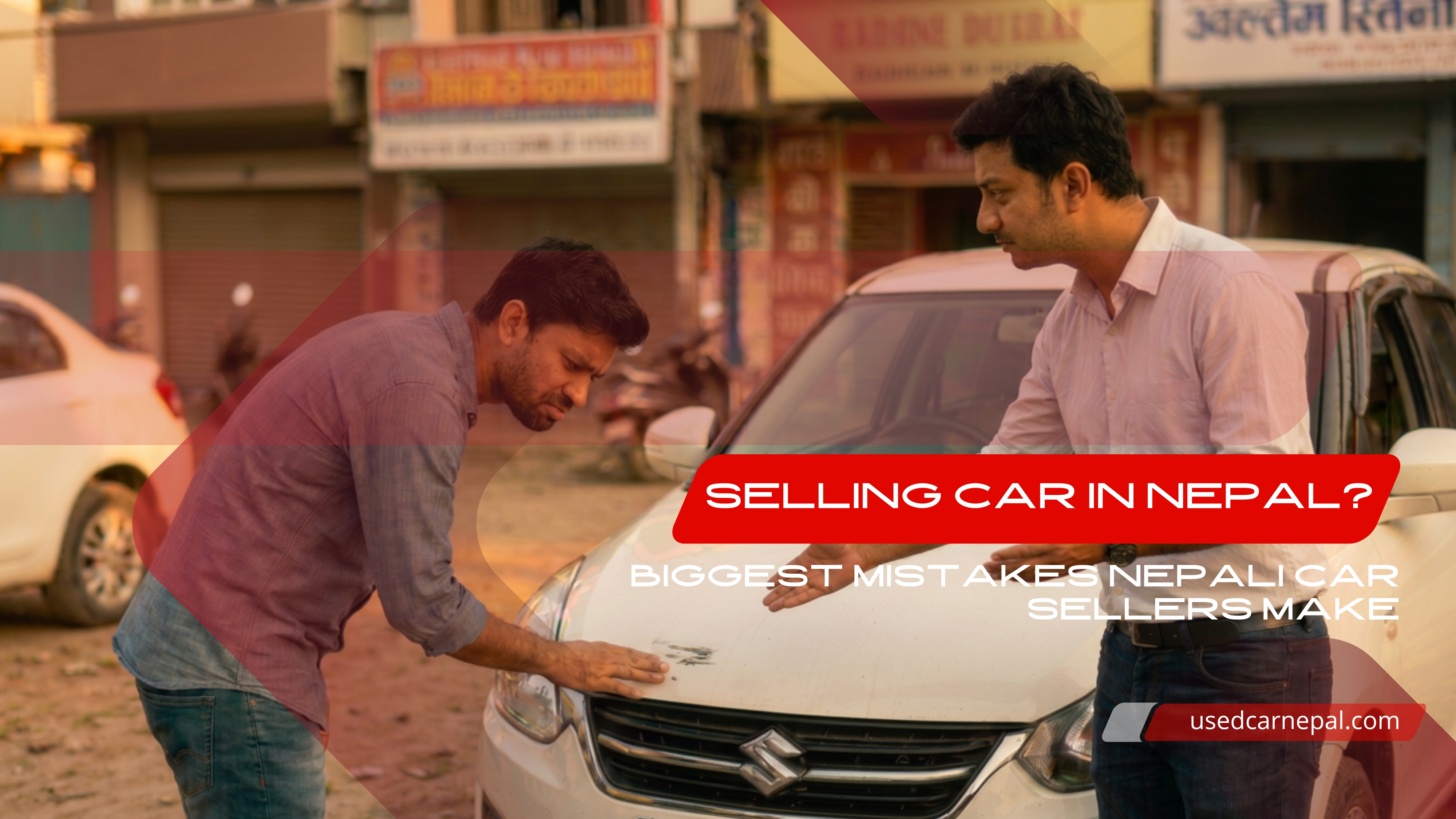
Common Mistakes Sellers Make When Selling Cars in Nepal (And How to Avoid Them)
Introduction
Sellers in Nepal often underestimate the complexity of a safe car sale. Common pitfalls include legal/documentation oversights (e.g. failing to transfer ownership or obtain tax/insurance clearances), pricing errors (overpricing due to poor market research), shoddy presentation (bad photos, hidden defects), unsafe negotiation or payment practices, poor advertising, and timing or communication blunders. These mistakes are frequent in Nepal’s market and can lead to fines, legal disputes, lost sales, or fraud. For example, Nepali law requires vehicle ownership transfer within 15–30 days of sale; failing to do so incurs penalties and keeps the seller legally liable. To avoid such issues, sellers should follow checklists (e.g. verifying Bluebook, tax clearance, insurance, sale agreement, etc.). Set realistic prices based on comparable listings, take honest, high-quality photos, use secure payment and paperwork (bill-of-sale), and advertise on reputable platforms. In each section, we describe the mistake, its Nepali context, consequences, and mitigation.
Legal / Registration / Documentation Errors
Failure to Transfer Ownership Promptly
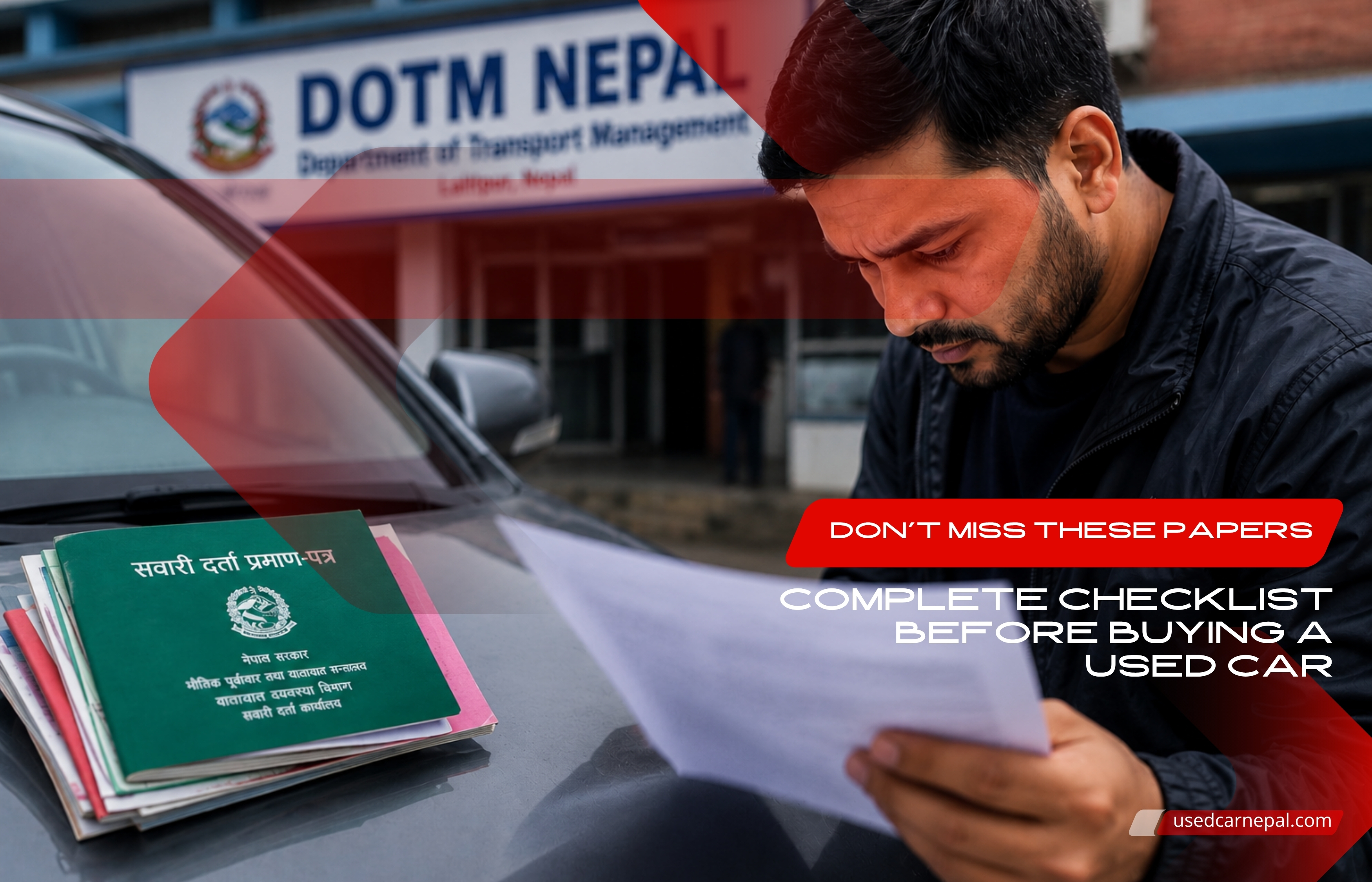
In Nepal, both seller and buyer share responsibility for transferring the title at the Department of Transport Management (DoTM). Sellers often delay or skip the transfer, erroneously thinking “it’s the buyer’s job.” In reality, the law mandates transfer within ~15 days (some accounts say 15–30 days). If neglected, the seller remains the legal owner, liable for accidents, fines, or crimes involving the car. Fine penalties and legal disputes can follow. This mistake is very common, especially in informal sales. Example: Legal guides warn that “failing to transfer ownership can lead to legal disputes, fine penalties, problems in accidents [and] insurance denial."
Use a standard sale agreement (“Kharida Bikri Karar”), and complete the DoTM transfer immediately. Bring the seller's and buyer's IDs, original Bluebook, tax clearance, and insurance papers to the DOTM together. Keep copies of all documents and the official DoTM receipt. A transfer checklist (Bluebook, ID copies, sale deed, tax clearance, NOC for loans, updated insurance, and transfer fee) should be ticked off before finalizing the deal.
Missing or Incomplete Documents
Sellers sometimes list cars without all the paperwork ready. Commonly overlooked items include the original Bluebook (vehicle registration certificate), up-to-date tax clearance certificate, active insurance policy, and any required PUC/fitness certificate. In Nepal, the Bluebook is mandatory proof of ownership, and you cannot transfer title without it. Forgetting to pay road taxes or obtain a clearance means the DoTM will reject the transfer. Likewise, insurance must be valid and in the seller’s name until the sale; if it lapses or expires, the buyer may refuse the deal. These lapses happen often due to seller negligence or ignorance of rules. Example: Guidance from Nepal’s used-car FAQ emphasizes verifying the “original Bluebook, tax clearance certificate, insurance papers, and Pollution Under Control certificate” before sale. Consequence: Lacking any document can block the sale or force expensive corrections. The DoTM will reject transfers for “unpaid road tax, pending loan/hypothecation, incomplete documents, or fake or outdated insurance." Before listing, verify the original Bluebook, seller+buyer citizenships, signed sale deed, latest tax clearance, loan NOC (if financed), and insurance.
Tax and loan Non-Clearance
Many Nepali sellers neglect to clear outstanding vehicle loans or taxes before selling. If a car is still under loan or hypothecated, the seller must obtain a No-Objection Certificate (NOC) from the bank. Failing to do so means the transfer will be rejected. Similarly, sellers sometimes fail to pay road/parking tax, assuming the buyer will handle it; instead, a tax default will stop the sale and incur penalties. This is fairly common because many owners defer tax or consider loans separately. Consequence: Transfer delays or outright cancellation; possible legal issues if penalties mount.
Lack of a Sale Agreement (bill-of-sale)
Some sellers just hand over the car without a written deed. Nepal’s DoTM requires a signed sale agreement (“Kharida Bikri Karar”) to process a transfer. Omitting this makes the transfer illegal and unenforceable. This mistake often happens in casual peer-to-peer sales. Consequence: No legal record of sale; disputes over price or condition can’t be resolved.
Insufficient Identification
At DoTM, sellers must present a valid ID (citizenship or passport) for both parties. A mistake is not having proper copies or any ID, especially if foreigners are involved. Consequence: Transfer denied.
Skipping Vehicle Inspection/Test
Some sales omit getting the vehicle physically inspected by authorities. In Nepal, the DoTM inspects the engine/chassis for mismatches. Sellers who skip pre-checks risk transfer delays.
Practical Tools: A sample checklist for sellers should include: “Original Bluebook, Citizenship (both parties), Signed Sale Agreement, Tax Clearance, Insurance, Loan NOC (if any), Transfer Form, Transfer Fees, Physical Inspection, Buyer’s New Bluebook.”
Sellers should prepare the vehicle and paperwork in advance. Clear, well-lit photos and complete documents (Bluebook, tax clearance, insurance, sale deed) help avoid legal and procedural errors.
Pricing Mistakes
Overpricing the Vehicle
Sellers often list cars well above market value, expecting negotiation. In Nepal, owners frequently have an emotional attachment or ignorance of depreciation. The used market in Nepal is tight due to high import costs, but still, unrealistic pricing keeps cars unsold for months. For example, Nepali buyers note that “the second-hand market is overpriced” (e.g. 2012–13 models still asked at NPR15–17 lakhs) on forums. While no official data is cited here, it’s a well-known complaint. Why it happens: Sellers may consider import taxes, brand, or what dealers sell similar models for, rather than checking actual resale listings. Also, during festival seasons (Dashain/Tihar), demand spikes, which can inflate seller hopes. Consequence: Long listing times, lower final sale price, or no sale at all.
Research similar cars on multiple platforms (HamroBazar, MeroAuto, Meromoto, etc.) and set a competitive price. Use pricing tools or guides. As SeeCar advises, “Research similar cars … Consider factors like condition, mileage, age… Price slightly above your minimum to allow negotiation." If unsure, sellers can consult local dealers or online forums for pricing benchmarks.
Check our full guide on the used car price guide in Nepal
Underpricing / Panic selling
Conversely, some sellers underprice cars out of desperation (e.g. urgent money need). This is less common but still a mistake, leading to direct financial loss.
Even if urgent, get multiple valuations and consider negotiating terms (e.g. quick sale for partial payment upfront). Include an explanatory note in the listing to justify a fair (if slightly lower) price if using a quick-sale strategy.
Not Factoring in Costs
In Nepal, sellers sometimes forget to account for outstanding service costs or upcoming taxes (e.g. if selling late in the fiscal year). They set the price thinking “net to me," but buyers deduct anticipated costs or transfer taxes from offers. Be transparent about recent maintenance and factor any pending costs into the price.
Poor Negotiation Tactics
Overly rigid bargaining or refusing any offers can scare buyers away. In Nepal’s relationship-driven culture, being too brusque is off-putting. Expect haggling as part of the process. Set your asking price higher to allow room, and be polite in negotiations.
Practical Tools: A pricing checklist could include surveying at least 5 comparable listings, noting the average price, considering the vehicle’s condition/special features, and then setting the price ~5–10% above your minimum acceptable amount.
Vehicle Presentation and Inspection Issues
Poor Photos and Listing Details
Many Nepali sellers post only one or two low-quality photos or focus only on the exterior, making buyers suspicious. Photos taken at odd angles or without cleaning the car detract interest. Why: Sellers may not realize buyers rely heavily on online images. Consequence: Fewer inquiries and lower buyer confidence.
Take multiple high-quality photos: front, rear, sides, interior (dash, seats), engine bay, and any flaws. UsedCarNepal advises, “Take high-quality photos from multiple angles, including interior, exterior, and engine photos." Mention mileage and color. Highlight recent maintenance (e.g. new tires) in captions.
Incomplete Service History
Sellers sometimes discard old service bills or forget to show them. Buyers may fear hidden issues if maintenance records are absent. Mitigation: Gather and show all service receipts or a written service log. If none exist, explain why (e.g. independent mechanic work). Transparency builds trust.
Hiding Defects or Past Accidents
Concealing dents, rust spots, oil leaks, or accident repairs is a serious mistake. Nepali consumers value “honesty” in private sales; discovering a hidden defect after the sale can provoke demand for a return or even police complaints. Consequence: Canceled sale, reputational damage, or even small claims. Mitigation: Disclose any known issues upfront. State “as-is” condition and price accordingly. If major fixes are needed, either fix before selling (to command a better price) or adjust the price with a note (“needs front bumper repair”).
Not Allowing Inspection or Test-Drive Requests
Some sellers refuse independent mechanic checks or escorted test drives out of fear the buyer will steal the car. While caution is understandable, an outright refusal signals dishonesty.
Accommodate legitimate inspection (have a friend watch the car). For test drives, require buyer to bring a driver’s license and sign a simple “test drive agreement” (not an official form, just a written note stating where they will go and with what ID) to deter theft. Meet buyers in public places.
Negotiation and Sales Process Errors
Unsafe Test Drives
Letting an unverified stranger drive your car unsupervised is very risky. Sellers have lost vehicles to “prospective buyers” on test drives. In Nepal, there is no formal legal form for test drives, but the best practice is to meet in public, accompany the drive, and keep the keys/license with you. Always ensure the buyer has a valid driving license.
Require the buyer to show an official ID, and consider having them sign a simple form (even a scrap paper) noting their name, license number, and a disclaimer. Meet with a friend or family member. Do not hand over the keys or leave the car unattended.
Insecure Payment Methods
A common scam is the “overpayment/fake cheque” trick. For example, a buyer may offer to pay by cheque for more than the price and ask you to refund the difference; the original cheque later bounces. Nepali sellers may also accept large bundles of cash, which can be counterfeit or from illegal sources. Consequence: Loss of car or money.
As UsedCarNepal warns, “Verify payment before transferring ownership” and “be wary of overpayment or fake cheque”. Ideally, use bank transfers or verify local bank cheques by contacting the issuing bank. Avoid taking third-party or foreign currency payments without verifying. Never release the car until the funds fully clear in your account. Always write and sign a receipt (bill of sale) at payment time, specifying amount and date.
Lack of a Written Receipt/Invoice
Conducting a cash sale without a formal receipt leaves the seller vulnerable. For example, the buyer could later claim they never paid or dispute the amount. Issue a simple written receipt when you accept payment, detailing the car (VIN, plate), sale price, date, and buyer/seller names and signatures. This is in addition to the stamped sale agreement and helps both parties’ records.
Skipping Escrow or Official Services
Some Nepali sellers try to use unverified “escrow” services or intermediaries to handle payment. Without trust, these services can be scams. If any third-party service is used, choose a reputable one (like established dealers or banks). Otherwise, meeting at the buyer’s or seller’s bank branch is safest for the transfer and payment in one place.
Rushing or High-Pressure Selling
Pushing a sale too aggressively can backfire. Nepali culture values personal rapport; buyers might withdraw if they feel hurried or pressured. Be patient, answer questions clearly, and give time for the buyer to inspect. Use checkpoints (inspections, step-by-step agreement) to gradually build trust rather than forcing a quick decision.
Advertising and Platform Mistakes
Wrong or Limited Platforms:
In Nepal, popular used-car channels include HamroBazar, MeroAuto, Meromoto, and Facebook Marketplace/Groups. Some sellers only post on lesser-known sites or misspell listings, greatly reducing visibility. Consequence: Very few buyer inquiries. List on multiple major platforms, both local (HamroBazar, MeroMoto, etc.) and social media groups. Also, share on your own Facebook/Twitter with Nepali car groups. Use correct Nepali (or bilingual) terms and include all car details (model, year, condition, extras).
Poor Listing Text:
Some sellers write minimal or unclear descriptions (“Car for sale, call...”) without specifying model/year/mileage. Others mix Nepali and English haphazardly, confusing readers. Write a detailed, honest description. Include make, model, year, mileage, fuel type, any modifications (e.g. CNG kit), service history, and reasons for selling. Use bullet points or paragraphs for clarity. If buyers come from different regions, consider writing in Nepali or both Nepali and English.
Overusing Promotions or Scams:
Paying for “highlighted listings” is unnecessary. Worse is falling for frauds where “platform representatives” ask for fees outside the site. Use free listing features. Only pay for official site advertising if it’s a legitimate service (e.g. HamroBazar premium listing). Never send money to individuals who message you offering buyer services.
Scam Vulnerability:
Disclosing too much personal data in ads (home address and personal phone) can invite fraud. Some sellers even share scanned Bluebooks on public posts to prove ownership – a risky mistake. Omit personal details like home address. When asked to prove documents, show them in person or blur sensitive parts.
Ignoring Red Flags:
Unsophisticated sellers might entertain obviously fake inquiries (bots or offshore buyers) without caution, losing time. Be skeptical of buyers who offer to pay before seeing the car or ask for personal contact info outside the platform. Use platform messaging tools as long as possible, and report spam.
Timing and Market-Cycle Mistakes
Selling in Low-Demand Seasons
In Nepal, car sales often dip during monsoons (road conditions, festivals), so posting then can delay sales. Rushing to sell before travel plans (e.g. leaving abroad) can force bad deals. If possible, list during high-demand periods (festival shopping months like Sept-Oct) or after known peaks so buyers have cash. However, do not wait too long past the fiscal year-end when buyers may be preoccupied with taxes.
Not timing Maintenance
Selling immediately after a major repair (fresh battery, new tires) can justify a higher price, whereas selling right before needed fixes is a mistake. Do minor fixes and service before listing to increase appeal and justify price.
Ignoring Depreciation
Some sellers hold out for “peak value” thinking cars appreciate. In Nepal’s taxed market, cars lose value after a year. Set a realistic expectation of depreciation (often a 10–20% drop per year on used cars here) and price accordingly.
Cultural and Communication Mistakes
Language Mismatches
Nepal is multilingual, but Nepali (in Devanagari script) is the common business language. Sellers who only list in English or with heavy English acronyms (like “AT” without explanation) may confuse local buyers. Conversely, addressing urban buyers only in Nepali might miss educated buyers who prefer English specifications.
Consider a bilingual listing: basic info in Nepali and key specs in English. Use clear, polite language (Nepalese culture favors courtesy). For example, greeting (“नमस्कार”) and thanking can build rapport.
Tone and Style
In Nepal, overt bragging (e.g. calling a normal hatchback “best car ever”) can be seen as suspicious. Also, sellers who cut off negotiation abruptly or act rude can offend buyers. Maintain a friendly, straightforward tone. Be patient and answer cultural cues (a buyer often “negotiates” more out of routine than animosity).
Ignoring Local Preferences
Some models or colors sell better in different regions of Nepal. A seller not aware of these nuances might misjudge demand. For instance, 4WDs are prized in hilly areas. Highlight features that appeal regionally (if relevant) or note local use history (e.g. “used for family trips in Kathmandu”).
Post-Sale Liabilities and Legal Exposure
Liability for Incidents:
Until the DoTM records the transfer, the car is still registered to the seller. If an accident or crime involves the car, the seller could be summoned. Nepali law recognizes this risk: it explicitly warns that not transferring can lead to “problems in accidents” and insurance denial. Consequence: Even after “selling”, a former owner might pay for damages or face police inquiry if the vehicle was misused.
Insurance Claims Denial:
If an accident occurs and the insurance is still in the seller’s name, the insurer may deny the claim or chase the person on record. Promptly notify your insurer of the sale. Have the buyer register insurance in their name immediately.
Tax and Fine Repercussions:
Any traffic fines or parking tickets incurred before transfer will come to the registered owner’s door. Sellers who delay transfer risk accumulating unexpected fines. Check and clear any outstanding fines or taxes before sale. (Nepal’s DoTM requires no pending fines for transfer.)
Warranty or “as-is” Disputes:
Although private sales in Nepal are generally “as-is,” a buyer could try a consumer-protection claim if deception is proven (e.g. selling a stolen part). Keep communications and ads honest. A signed sale agreement can include an “as-is” clause, clarifying that post-sale claims are limited.
Frequently Asked Questions
1. What is the biggest mistake sellers make when selling cars in Nepal?
The most common mistake is setting an unrealistic asking price that discourages serious buyers.
2. How can I avoid payment fraud?
Use verified banking channels and confirm funds before transferring ownership.
3. What documents are required when selling a car?
Generally, sellers need the Blue Book, insurance papers, tax receipts, and ownership verification documents.
4. How important are service records?
Service records demonstrate responsible ownership and improve buyer confidence.
5. Should I repair my vehicle before selling it?
Essential repairs often increase resale value and attract more buyers.
Conclusion
Understanding the common mistakes that sellers make when selling cars in Nepal is essential for achieving a successful and profitable sale. From proper pricing and maintenance to documentation and ownership transfer, every step contributes to the final outcome. Sellers who prepare thoroughly, communicate honestly, present their vehicles professionally, and complete legal requirements correctly are far more likely to secure the best possible value.
By avoiding these costly mistakes, vehicle owners can shorten selling time, attract qualified buyers, strengthen negotiation power, and complete transactions with confidence. A strategic approach transforms a challenging process into a smooth and rewarding experience.
Sources
Nepali transport rules and industry guides inform these recommendations. Where exact local data was not publicly available, we relied on official transfer guidelines and reputable Nepali auto platforms. Any gaps (e.g. exact fraud statistics) are noted as no official Nepali reports exist in sources.
Related Posts
How to Sell a Used Car in Nepal Fast and at the Best Price (2026 Guide)
Selling a used car in Nepal? This 2025 guide explains pricing, documents, negotiation tips, ownership transfer process, and how to sell your car safely and at the right price.
Comments (0)
No comments yet. Be the first to comment!